Wednesday, May 1, 2013

1939 - 26th Ceremony

The Story of the Last Chrysanthemum (Director: Kenji Mizoguchi)
Nominees: The Wizard of Oz, Ninotchka, Gone with the Wind, Stagecoach

Oscars pick: Gone with the Wind
Nominees: Dark Victory, Goodbye Mr. Chips, Love Affair, Mr. Smith Goes to Washington, Ninotchka, Of Mice and Men, Stagecoach, Wizard of Oz, Wuthering Heights 

Director Kenji Mizoguchi could have titled this the Artist and his Muse. The picture is an account of the adopted son of a great actor, who is unable to follow in his father's footsteps as far as talent goes. People fawn over him due to his name, though in truth, he's a failure at his craft. The woman, a family employee who takes care of his baby brother, is the only one who is honest with him, which inspires the young man to do better. Love blooms - however, she's considered 'below his station'. And that sets up the rest of the tragic tale.

Last Chrysanthemum is quintessential Mizoguchi. There's the thread of sadness, self-sacrifice, a strong feminine presence. And while there is hardship, the director shows great compassion for these people and their plight. That's not only evident in the way the story has been written, but in the care in which they are shot. The camera, soft-focus lenses, and lighting... Kenji and his crew facilitate empathy using everything from composition to props (the gift of a mirror and what it says about the time and place this is set, as well as the relationship between Kiku and Otoku). Interestingly, he accomplishes this without the use of close-ups.

While there are examples of quicker cutting used to build tension (during Kiku's comeback performance), the director leans heavily on long takes – some of which are accompanied by dolly shots... like in that lovely scene where our couple simply walk and discuss his art. It's a beautiful moment: a simple but pivotal one where we see a true and honest friendship come to life.

Critics Johnathan Rosenbaum and Tony Rayns consider it the director's crowning achievement. And while I'd probably give that honor to Sansho, this moving, bittersweet romance certainly shows Mizoguchi in peak form.

Exceptional film. The Master really tore the heart from my chest with this one.

Here are my thoughts on the Criterion release.

Nominees? I like Oscar's choice; it’s a great one. The sprawling civil war romance represented the year well. Capturing the hearts of the public for years, it became one of filmdom’s biggest box office hits. Just as timeless is the Wizard of Oz. Interestingly, Victor Fleming is credited as director on both films, even won an Oscar for GWTW, but he didn't complete either movie. On Wind, he was the middle director (George Cukor started it, Sam Cook was directing by the end of it) and on Oz, he was assisted by several, including King Vidor who filmed the song "Somewhere, Over the Rainbow", while Fleming was off shooting GWTW.

Oz is magical. It opens in dusty colored Kansas before blooming into candy-colored hues once Dorothy enters the land of Oz. It’s an exquisite looking picture, from the sets to the costumes to the special effects. And the music, so full of whimsy and longing, contributes to the vibrancy of the production. Scary, wondrous, heartwarming, and funny... Oz has it all.

Beyond Wind and Oz, I also have great affection for Ernst Lubitsch's sophisticated romantic comedy, Ninotchka, Penned by Charles Bracket and Billy Wilder, and starring Greta Garbo as the title character. The movie works best at the start, with Garbo’s hilarious work as the taciturn Russian, Ninotchka. But once she lightens up the film loses the thing that made it different/special, and it becomes a standard romance. Also, John Ford's Stagecoach is of particular interest as it features John Wayne's star-making role. Wayne had been plugging away for years without making much of a splash. With Stagecoach he took his first steps towards becoming an icon of the silver screen.

As for my acting awards, this was easy. I agree with Oscar on the actresses, Leigh is phenomenal, and Hattie's a delight in her groundbreaking role, but I differ on the actors — Donat was pleasant... maybe too pleasant and too idealized, he's very good but I prefer him in The 39 Steps, Count of Monte Cristo, and Citadel; and Stewart's a powerhouse in Mr. Smith. According to the book "Inside Oscar", the two were neck and neck in the voting.

Best Actress: Vivien Leigh, Gone with the Wind
Honorable Mentions:
Greta Garbo, Ninotchka * Bette Davis, Dark Victory * Ginger Rogers, Bachelor Mother * Judy Garland, Wizard of Oz * Kakuko Mori, The Story of the Last Chrysanthemum * Jean Arthur, Mr. Smith Goes to Washington * Barbara Stanwyck, Golden Boy * Flora Robson, Poison Pen * Merle Oberon, Wuthering Heights

Best Actor: James Stewart, Mr. Smith Goes to Washington
Honorable Mentions:
Charles Laughton, Hunchback of Notre Dame * Clark Gable, Gone with the Wind * Henry Fonda, Young Mr. Lincoln * Robert Donat, Goodbye, Mr. Chips * Basil Rathbone, Hound of Baskervilles * John Wayne, Stagecoach * Maurice Schwartz, Tevye * Shôtarô Hanayagi, The Story of the Last Chrysanthemum * Laurence Olivier, Wuthering Heights
Supporting Actress: Hattie McDaniel, Gone with the Wind

Supporting Actor: Cedric Hardwicke, Hunchback of Notre Dame


< Previous * Next >

Home

Sunday, April 28, 2013

1938 - 25th Ceremony

Bringing Up Baby (Director: Howard Hawks)
Nominees: Fallen Blossoms, The Lady Vanishes, Olympia, Port of Shadows, Pygmalion

Oscars pick: You Can’t Take It With You
Nominees: The Adventures of Robin Hood, Alexander’s Ragtime Band, Boys Town, The Citadel, Four Daughters, Grand Illusion, Jezebel, Pygmalion, Test Pilot

Oscars top film, Capra's irritating and preachy farce, You Can't Take It With You is one of  their weakest "Best Picture" winners in my opinion. And while I'll give the Academy props for nominating a foreign language film (their first - Jean Renoir's highly praised Grand Illusion - actually a 1937 release). I have to admit the movie doesn't resonate for me. I found it laborious and didn't care for it structurally, didn't like the clash of humanism and classism, the humor was a fail and I disliked how polite it was (these were prisoners of war? yes, I know he was trying to make a point with that) In truth, aside from the River, I can’t seem to get fired up over Renoir’s overall body of work. They look good and he plays with some big ideas, but I simply don't care for the telling.

Several (unnominated) critical darlings of 1938 include Eisenstein’s historical epic, Alexander Nevsky. A production that was closely monitored by Stalin, which gives it the air of propaganda, but it’s still a notable effort. Sticking to the theme of propaganda, there’s Leni Riefenstahl’s documentary, Olympia. While Riefenstahl’s name is cloaked in controversy, the technical skill she puts on display with this picture was groundbreaking.

Oscar also left out 3 of the years brightest: The nimble wit of Hitchcock's thriller Lady on a Train, the poetic realism of Marcel Carné and Jacques Prevert's Port of Shadows, and Howard Hawks screwball delight Bringing Up Baby, which is my favorite of the year.

Baby is a madcap tale about a beleaguered paleontologist (Cary Grant) a shrill eccentric (Katharine Hepburn), a leopard named baby... and a missing dinosaur bone. There's nothing subtle about BuB, it's flat out insane. And one of the most uproarious pictures I've ever seen, as well as one of the quintessential screwball comedies of the era.

Versatile Howard Hawks was a master in any genre: western, romance, crime, and showed an equally deft hand with comedy. Though he filmed primarily medium shots with few cross-cut edits, the picture is notable for its quick pacing. As well as the snappy, overlapping dialog that's rife with innuendo and double entendres ("You tried it in the tail yesterday and it didn’t fit.” says David's fiance as he struggles to figure out where to place a bone in a dinosaur's skeleton he's working on.)

Grant -who wanted to pass on the role because was unsure he could play an academic- gives one of his best performances playing the mild mannered David. His timing is impeccable and it's a kick watching his growing exasperation with this situation he's caught up in. Hepburn -for whom the script was written specifically for- is said to have struggled with the comedic aspects, but she proves to be a pro at it and is delightfully annoying as the free-spirited Susan. You also get some nice comedic support from May Robson, Charles Ruggles, and Fritz Feld.

Best Actress: Katharine Hepburn, Bringing Up Baby (pictured top) & Holiday
Honorable Mentions: Michèle Morgan, Port of Shadows * Margaret Sullavan, Three Comrades * Margaret Lockwood, The Lady Vanishes * Anna May Wong, Dangerous to Know * Wendy Hiller, Pygmalion * Elsa Lanchester, The Beachcomber * Bette Davis, Jezebel 

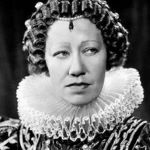
Supporting Actress: May Whitty, The Lady Vanishes (pictured left)


Best Actor: Cary Grant, Bringing Up Baby (pictured top) & Holiday
Honorable Mentions: Harry Baur, Mollenard * James Cagney, Angels with Dirty Faces * Michael Redgrave, The Lady Vanishes * Nikolai Cherkasov, Alexander Nevsky * Robert Donat, Citadel * Jean Gabin, La Bête Humaine & Port of Shadows * Leslie Howard, Pygmalion * Raimu, The Baker's Wife 

Supporting Actor: Michel Simon, Port of Shadows (pictured left)


< Previous * Next >

Home

Friday, April 19, 2013

1937 - 24th Ceremony

Snow White and the Seven Dwarfs (Director: David Hand)
Nominees: Pépé le Moko, The Life of Emile Zola, You Only Live Once, Street Angel, Humanity and Paper Balloons, Make Way for Tomorrow, The Awful Truth, Captains Courageous, Vidyapati

Oscars pick: The Life of Emile Zola
Nominees: The Awful Truth, Captains Courageous, Dead End, The Good Earth, In Old Chicago, Lost Horizon, One Hundred Men and a Girl, Stage Door, A Star is Born 

Though a few folks see it as an Oscar blunder these days, I thoroughly enjoyed the Life of Emile Zola. Paul Muni gives one of his best performances playing the feisty Zola, who goes on a tireless crusade to defend the wrongly accused Alfred Dreyfus. It’s an idealized account, but still an edifying bio-drama. 

Better than Zola was Disney’s seminal feature, Snow White and the Seven Dwarfs. Disney’s folly (as it was called by critics during its making) wound up changing the animation world. Proving that an animated full-length feature could be both commercially and artistically viable. Our heroine isn’t a great feminist role model - wanting only to marry her Prince and cook for dwarfs (and to make sure the filthy gits wash their hands). In fact, Snow -with her irritating baby-woman voice- and her prince are the least interesting figures in the movie. The dwarfs and the evil queen are the personalities that drive the film. Nitpicks aside: The slight story still charms, the art is frequently striking, and the music is as wonderful as ever.

Of the other Oscar nominees: I enjoyed The Good Earth and Lost Horizon. Stage Door had a stellar cast playing its collection of struggling actresses -among them, Katharine Hepburn, Ginger Rogers, Lucille Ball, Ann Miller, and Eve Arden. I liked it, though parts didn’t click for me (it’s a little stagy and too impressed with its own quick banter, it’s overly melodramatic at times, and actress Andrea Leeds - who received an Oscar nom - was terrible).

My nominees included Captains Courageous with Spencer Tracy and his bad accent. Leo McCarey’s The Awful Truth, a romantic comedy that featured standout performances from Cary Grant and Irene Dunne. McCarey also pulled at the heartstrings with Make Way for Tomorrow. A film which inspired Ozu’s Tokyo Story in its tale of an old couple having to stay with their children (who don’t really want them there).

The movie that came closest to unseating Disney's classic was Pépé le Moko. This French production was a tense, romantic flick about a master criminal (Jean Gabin) hiding out in the Casbah in Algiers. It's an influential film, the proto type for Noir, and an inspiration for a few elements in Casablanca.

Best Actor: Jean Gabin, Pépé le Moko 
Honorable Mentions: 
Henry Fonda, You Only Live Once * Cary Grant, The Awful Truth * Paul Muni, The Life of Emile Zola * Fredric March, A Star is Born * Victor Moore, Make Way for Tomorrow * Humphrey Bogart, Black Legion * Robert Montgomery, Night Must Fall * Ronald Colman, The Prisoner of Zenda


Best Actress: Irene Dunn, The Awful Truth
Honorable Mentions: 
Jean Arthur, Easy Living * Sylvia Sidney, You Only Live Once * Beulah Bondi, Make Way for Tomorrow * Katharine Hepburn & Ginger Rogers, Stage Door * Michiko Kuwano. What Did the Lady Forget? * Kenan Devi, Vidyapati * Barbara Stanwyck, Stella Dallas


Supporting Actress:
Flora Robson, Fire Over England

Runners up: Xuan Zhou, Street Angel & May Whitty, Night Must Fall

Supporting Actor: Victor McLaglen, Wee Willie Winkie


Tough choice at Best Actress as the year features my favorite performances from Jean Arthur and Dunn.


< Previous * Next >

Home

Wednesday, April 17, 2013

1936 - 23rd Ceremony

Swing Time (Director: George Stevens)
Nominees: Modern Times, Sabotage, The Story of a Cheat, Dodsworth, Fury, Sisters of the Gion, Mr. Thank You, My Man Godfrey, The Only Son, Rembrandt

Oscars pick: The Great Ziegfeld
Nominees: Anthony Adverse, Dodsworth, Libeled Lady, Mr. Deeds Goes to Town, Romeo and Juliet, San Francisco, The Story of Louis Pasteur, A Tale of Two Cities, Three Smart Girls
 
Hindsight is 20/20, but I find it curious that the overstuffed Great Ziegfeld, was given 7 noms, and won Oscar's best picture. While the Fred Astaire/Ginger Rogers’ classic, Swing Time received barely a nod in its direction (it received 2 nominations, winning 1 for Best Song). Of the two, the effervescent Swing Time has better music, better dancing, is a funnier comedy and has a captivating romance.… plus it doesn't go on forever.

Swing Time had some stiff competition from the likes of  Hitchcock's underrated Sabotage, Wyler's Dodsworth with its amazing cast, and Fritz Lang's intense Fury, which features superb performances from Spencer Tracy and Sylvia Sidney. For many a film buff, the season's best was Charlie Chaplin’s Modern Times. Chaplin’s gooey sentimentality has always been his Achilles heel, but he doesn’t let it get too messy in this flick. It is, of course, funny and Chaplin is a brilliant pantomime. Its story of a man and a young woman (Paulette Goddard) trying to get by in this impersonal industrial age is a winner.

But so too is Swing Time, which is flawless -from the Jerome Kern score to the Art deco sets- simply flawless, I think it's Fred and Ginger's very best, surpassing even their superlative Top Hat. While the story is slight (a performer and gambler travels to New York City to raise the $25,000 he needs to marry his fiancée, only to become entangled with a beautiful aspiring dancer - imdb) the musical numbers are incredible. Director George Stevens wanted his dancer's to work their magic and have them, not the camera, be the focus. He used a minimum of edits and only 1 or 2 camera setups in their numbers, and this proves to be a wise decision. Especially in the memorable, "Never Gonna Dance", which shows off the duo at their finest (Many feel this is Ginger at her peak -and most fluid- form)

Highlights? Fred sings the Oscar-winning Kern/Field's number "The Way You Look Tonight", which would go on to become his biggest hit. And the supporting characters are a joy, especially Victor Moore as the addled Pops. Overall the movie is like bottled happiness; a special confection that allows me –for an hour or so- to leave all my cares behind.

Note: This was the first year the Academy handed out awards for supporting performances - they were won by Gale Sondergaard (Anthony Adverse) and Walter Brennan (Come and Get It).

Best Actor: Walter Huston, Dodsworth
Honorable Mentions:
Charles Laughton, Rembrandt * Charlie Chaplin, Modern Times * Spencer Tracy, Fury * William Powell, My Man Godfrey * Louis Jouvet & Jean Gabin, The Lower Depths * Paul Robeson, Song of Freedom * Oscar Homolke, Sabotage
Best Actress: Sylvia Sidney, Fury & Sabotage
Honorable Mentions: 
Jean Arthur, Mr. Deeds Goes to Town * Ingrid Bergman, Intermezzo * Greta Garbo, Camille * Jean Harlow, Libeled Lady * Carole Lombard, My Man Godfrey * Ginger Rogers, Swing Time * Ruth Chatterton, Dodsworth * Rosalind Russell, Craig's Wife * Irene Dunne, Theodora Goes Wild

Supporting Actor: Paul Robeson, Show Boat

Supporting Actress: Mary Astor, Dodsworth


Monday, April 15, 2013

1935 - 22nd Ceremony

The 39 Steps (Director: Alfred Hitchcock)
Nominees: Ruggles of Red Gap, The Good Fairy, Captain Blood, Top Hat, The Passing of the Third Floor Back, Sazen Tange and the Pot Worth a Million Ryo, Wife! Be Like a Rose!

Oscars pick: Mutiny on the Bounty
Nominees: Alice Adams, Broadway Melody of 1936, Captain Blood, David Copperfield, The Informer, The Lives of a Bengal Lancer, A Midsummer Nights Dream, Les Misérables, Naughty Marietta, Ruggles of Red Gap, Top Hat

My mother loved Clark Gable, my father liked Marlon Brando, so there was always this good-natured argument about which version of Mutiny on the Bounty was the better one. Most critics sided with my mother and the Academy; I gotta go with my dear old dad. Brando’s take is full of depth and layers, Gable's is pretty straight forward, with his Fletcher Christian a man’s man, who walks with a manly purposeful stride. Charles Laughton is a delightful scenery chewing Bly. But it's all pretty cut and dry and truly, the original Bounty doesn’t do a whole lot for me. Saying that I can understand why it won the Oscar. It carries itself with a certain prestige and it is well made.

For me though there was one, and only one deserving of the year’s top prize. While I adored the hilarious Ruggles of Red Gap with Charles Laughton, Fred and Ginger's Top Hat, and the swashbuckling spectacle that was Captain Blood (all Oscar noms). Alfred Hitchcock's suspenseful romance, The 39 Steps, is a God among mortals. Others might argue for The Bride of Frankenstein. And while I agree its a masterful production and I like many of the performances, Bride is undone by a thick slice of camp and the unbearably broad antics of Una O’Connor - whereas the twists and turns and humor, as well as the look and pacing and performances to be had in 39 Steps, is pure bliss and perfection.

The grandfather of North by Northwest, this tightly woven spy story establishes many of the themes we’ll see in future Hitchcock tales. There’s the paranoia, the man on the run, and the humor nestled side by side with nail-biting suspense. And of course, the camera work is distinct and eye-catching. This is Hitch's first truly great film, the best of his early British era... and it is very British - More understated and urbane than his American films, it nevertheless shows the director in full stride.

Unflappable Robert Donat (Mr. Chips) was a delight in the leading role. Madeline Carroll was Alfred's first "cool blonde" and became an in-demand star after this picture.

Best Actress: Sachiko Chiba, Wife! Be Like a Rose!
Honorable Mentions: 
Katharine Hepburn, Alice Adams * Greta Garbo, Anna Karenina * Ginger Rogers, Top Hat * Margaret Sullavan, The Good Fairy * Jeanette MacDonald, Naughty Marietta


Best Actor:
 Robert Donat, The 39 Steps (pictured top)
Honorable Mentions: 
Peter Lorre, Crime and Punishment * Charles Laughton, Mutiny on the Bounty & Ruggles of Red Gap * Takeshi Sakamoto, An Inn in Tokyo * Karloff & Clive, Bride of Frankenstein * Edward G. Robinson, The Whole Town's Talking

Supporting Actress: Elsa Lanchester, The Bride of Frankenstein
Runner up: Yoshiko Okada, An Inn in Tokyo

Supporting Actor: Ernest Thesiger, The Bride of Frankenstein (pictured above)

Special Award - Best Ensemble: The Passing of the Third Floor Back
Conrad Veidt, René Ray, Frank Cellier, Beatrix Lehmann, Anna Lee, Ronald Ward, Mary Clare, Cathleen Nesbitt, John Turnbull


< Previous * Next >

Home

Friday, April 12, 2013

1934 - 21st Ceremony

L’Atalante (Director: Jean Vigo)
Nominees: Les Misérables, It Happened One Night, Shen nu (The Goddess), A Story of Floating Weeds

Oscars pick: It Happened One Night
Nominees: The Barretts of Wimpole Street, Cleopatra, Flirtation Walk, The Gay Divorcee, Here Comes the Navy, The House of Rothschild, Imitation of Life, One Night of Love, The Thin Man, Viva Villa! The White Parade 

The Academy nominated 12 movies, and a lot of those, including -Flirtation Walk, Here Comes the Navy, One Night of Love, Cleopatra, and The House of Rothschild- were average at best. But at least they got it right in selecting Frank Capra's sparkling screwball comedy It Happened One Night as their winner.

Along with that one, I liked the Chinese silent classic, Shen nu (The Goddess), which is a superbly shot and composed film about a young mother who works as a prostitute to make ends meet. Ruan Lingyu (who committed suicide at age 24, a year after this film's release) gives a naturalized performance. The film is rooted in realism and explores social hypocrisy.

I was also blown away by Les Misérables, especially in the phenomenal work done by Harry Baur.

But after sifting through the top-ranked releases, one Felix worthy film stood out above the rest. That being Jean Vigo's endearing, L’Atalante.

Jean Vigo was one of the major influences on the French New Wave of the 50s and on Truffaut in particular. Sadly, Jean died at 29, with only 1 full-length feature and a handful of shorter films to his name. His L'Atlante is a poetic and bittersweet piece that focuses on a newlywed couple -rigid Jean and free-spirited Juliette- who live on a barge. They share this cramped space with a salty crew-mate and a cabin boy. Soon jealousy gets the better of the husband, and the romance of Paris draws the wife away.

This contemplative film features cinematography by Boris Kaufman, which was indispensable in helping create a picture that is dreamlike, sensual, and blends realism with the magical: A memorable example of this can be found during a sex scene conducted in a dream, while the couple is separated.

The film was sadly chopped up and set to ruin. Vigo was dying of tuberculosis and could do nothing to save his baby. Years later it found its audience and is now offered, restored (as best as it can be) by Criterion. While understated, it is without a doubt the cream of the crop, in a year where few things really wowed me.

🎭 Supporting actress was the difficult choice this season - I had several I liked, Bette Davis in Fog Over Frisco for one, I'd have gone with Louise Beavers in a heartbeat, but she seemed more a co-lead, with her own story. Then I saw where TMC described the role as "an extremely rare second lead in support of Claudette Colbert." And that settled the debate for me, a second lead in support, okay, I can see that.  BTW - Film Comment published a nice piece on the performance in their March-April 2016 issue

Best Actor: Harry Baur, Les Misérables
Honorable Mentions:
Clark Gable, It Happened One Night & Manhattan Melodrama * Robert Donat, The Count of Monte Cristo * John Barrymore, Twentieth Century * Takeshi Sakamoto, A Story of Floating Weeds * Fritz Kortner, Chu Chin Chow 

Best Actress: Lingyu Ruan, The Goddess
Honorable Mentions:
Claudette Colbert, It Happened One Night * Sylvia Sidney, 30 Day Princess * Bette Davis, Of Human Bondage * Carole Lombard, Twentieth Century * Josephine Baker, Zouzou * Anna May Wong, Tiger Bay & Java Head * Aline MacMahon, Heat Lightning * Mary Morris, Double Door

Supporting Actress:
 Louise Beavers, Imitation of Life
Nominees... Anna May Wong in Chu Chin Chow & Flora Robson, The Rise of Catherine the Great

Supporting Actor: Michel Simon, L’Atalante
Nominee... Peter Lorre, The Man Who Knew Too Much

Wednesday, April 10, 2013

1932-33 - 20th Ceremony

Island of Lost Souls (Director: Erle C. Kenton)
Nominees: Queen Christina, King Kong, Duck Soup, Trouble in Paradise, Fanny, The Water Magician, The Testament of Dr. Mabuse

Oscars pick: Cavalcade
Nominees: A Farewell to Arms, 42nd Street, I Am a Fugitive from a Chain Gang, Lady for a Day, Little Women, The Private Life of Henry the VIII, She Done Him Wrong, Smilin’ Through, State Fair

1932-33 has been a most troublesome alt-Oscar season. I've gone over and over these films, trying to find one that would distinguish itself above the others, and instead, they insist on huddling tight within this sphere of magnificence.

Trouble in Paradise, for example, is elegant, sexy, witty, and the acting is aces across the board. There's not any meat on the story, it's just a sweet, delightful dessert.

King Kong? It established the standard for future giant monster flicks (which steal from it liberally). Its appeal for me is in its technical achievements - the work and innovation put into the animation and FX.

The Marx Brothers, Duck Soup is total chaos, and I admit to having a low tolerance for Harpo’s brand of physical mayhem. But Groucho’s quick rejoinders make the movie for me. His dictator of Freedonia, Rufus T. Firefly, had me in stitches.

I Am a Fugitive from a Chain Gang? Fabulous start, fabulous finish... sags with a dullish middle section (regardless, Muni is incredible throughout). Queen Christina? It's notable for Garbo's layered performance and Mamoulian's penchant for creating a poetic look, rather than going for stark realism. Key scenes include Christina touching objects in the room she shared with her love, in an attempted to commit them to memory. And her haunting enigmatic expression at the films end. Again, I like these a lot, just as I liked The Eagle and the Hawk, Wild Boys of the Road, Liebelei, Movie Crazy, Dragnet Girl, 42nd Street, and the others I nominated up top.

What a vexing decision I had before me.

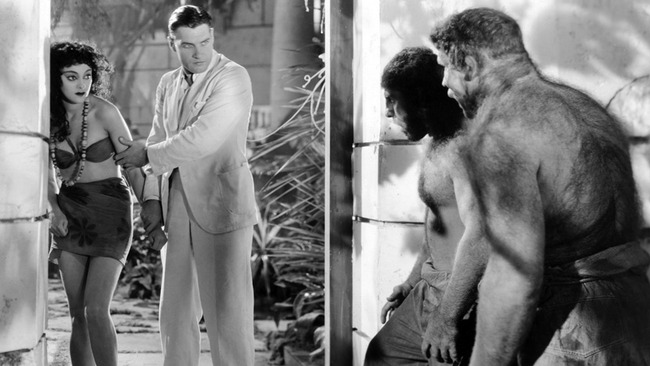
With brow furrowed and mind conflicted, I elected to go with a picture that scarred me, rattled my nerves, and fed my intellect - Island of Lost Souls, in which Charles Laughton outshines his own Oscar-winning performance as Henry the VIII. While the energetic scenery chewer is superb as the infamous King, I liked him even more as Dr. Moreau (a mad scientist who's been conducting experiments on animals). It’s a plum role, one that sadly Marlon Brando pissed down his leg in a remake. But Laughton doesn't squander the opportunity. Moreau’s a chilling figure: Behind his cherubic smile lays cruelty and in his eyes, arrogance, and madness.

It's philosophical horror - though apparently, it wasn't philosophical enough for writer H.G. Wells. However, as Christine Smallwood points out in her Criterion essay, "Wells’s book is all setup, a premise without a plot." If he'd had his way this would have been more a lecture than a movie. There's enough philosophy here, to go with the brute horror (those terrible cries of pain) and raw sexuality. At a mere 70 minutes, the film is lean, not a second is wasted. But I never felt like I was being rushed through it haphazardly. All its themes and nightmares are addressed efficiently, smartly.

Erle C. Kenton was an odd directorial choice as he was best known at that time for his knockabout comedies. He wasn't an A-list filmmaker, but he certainly captured lightning in a bottle here. Of course, he was aided by a remarkable story and screenplay (which has been quoted in several songs I own and adore), moody, shadowy cinematography by the talented Karl Struss (oh those wonderful close-ups) and astonishing makeup by Wally Westmore.

Acting? I liked Richard Arlen as our hero. No he's not Cary Grant, he doesn't have that kind of scene presence, but he is solid, and his outrage was convincing. Bela Lugosi has a small but important role and I took a shine to Kathleen Burke's panther woman, and her mix of the animal and the innocent. Ultimately though, this is Laughton's show, and without his great skill, I'm not sure the film works half as well. His Moreau is cold but personable, with a sadistic streak that bleeds through every pore (and without the empathy to counter it). Wearing that white suit, cracking that whip, and sneaking in those quick smiles, which makes him look like the naughty schoolboy whose privy to some dirty, inside joke - and relishing the idea of being hailed as a God. In all of it, Laughton is pitch-perfect.

This tale of science without soul ran me through the emotional wringer, and of the pictures I've examined, it was Island that left the deepest impression.

Of note: After this, the Academy would switch to a standard calendar year, which meant that since they extended 1933 to the end of the year, this Oscar season was 17 months long.

Best Actor: Charles Laughton, Island of Lost Souls (also The Private Life of Henry VIII, Sign of the Cross, The Old Dark House)
Honorable Mentions: 
Robert Lynen and Harry Baur, Poil de carrotte * Paul Muni, I Am a Fugitive from a Chain Gang * Paul Robeson, The Emperor Jones * Fredric March, The Eagle and the Hawk * John Gilbert, Downstairs * Herbert Marshall, Trouble in Paradise * Groucho Marx, Duck Soup * Michel Simon, Boudu Saved from Drowning

Best Actress: Greta Garbo, Queen Christina
Honorable Mentions: Lingyu Ruan, Playthings * Miriam Hopkins & Kay Francis, Trouble in Paradise * Michiko Oikawa, Japanese Girls at the Harbor * Magda Schneider, Liebelei * Takako Irie, The Water Magician * May Robson, Lady for a Day * Sumiko Kurishima, Every-Night Dreams * Jean Harlow, Red Dust * Katharine Hepburn, Little Women, Morning Glory, Christopher Strong
Supporting Actor: John Barrymore, Dinner at Eight

Supporting Actress: Marie Dressler, Dinner at Eight

< Previous * Next >

Home